
If your days are the volcano, the waterfalls, and a green town on a crescent bay, Hilo is the side to sleep on.
Hilo is the county seat on the Big Island’s wet east side. It has its own airport, a walkable downtown, and a 45-minute drive southwest on Highway 11 to the entrance of Hawaiʻi Volcanoes National Park.
This page walks you through the areas and streets where people stay in and around Hilo: downtown along the bayfront, Banyan Drive on the Waiākea Peninsula, the coast out Kalanianaʻole Avenue in Keaukaha, the neighborhoods upslope and north of town, and Volcano Village just outside the national park. Pick the base that matches the days you came for.
If you haven’t chosen a side of the island yet, start with Kona vs Hilo.
The short version
- Downtown and the bayfront: along Kamehameha Avenue and the streets around the market. Walk to breakfast, shops, and the bay.
- Banyan Drive (Waiākea Peninsula): the tree-lined loop on Hilo Bay where most of the town’s hotels sit, next to Liliʻuokalani Gardens.
- Keaukaha: east of the port on Kalanianaʻole Avenue, by the swimming parks. A residential coast, including a Hawaiian Home Lands community.
- Hilo outskirts and upcountry: Kaūmana, Wainaku, Pāpaʻikou. More room, more driving.
- Volcano Village and the Highway 11 corridor: the closest stays to Hawaiʻi Volcanoes National Park, just outside the entrance. Cooler, and a 45-minute drive from Hilo.
Downtown Hilo and the bayfront

Downtown wraps around the curve of Hilo Bay. The Hawaiʻi Tourism Authority calls it the island’s “biggest small town,” with old wooden storefronts, many on the National Register of Historic Places. Kamehameha Avenue runs along the bayfront through the center of town.
The Hilo Farmers Market sits at the corner of Mamo Street and Kamehameha Avenue. The Lyman Museum and the Pacific Tsunami Museum are downtown too.
Stay here if you want to walk to the market, the shops, and the bay in the morning.
Banyan Drive and the Waiākea Peninsula
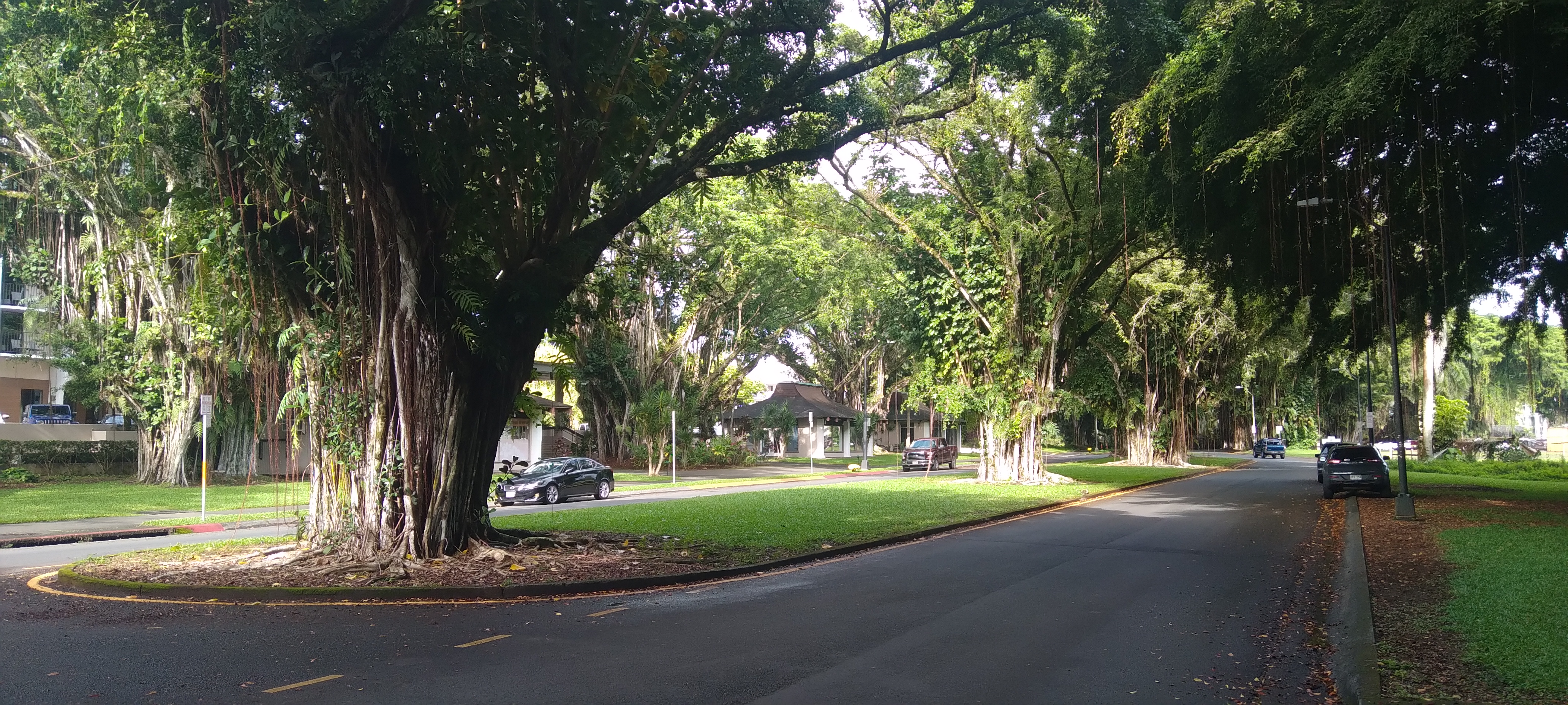
Banyan Drive loops along the shoreline of Waiākea Peninsula on Hilo Bay, under rows of old banyan trees. A State of Hawaiʻi market study of Hilo lodging found that most of the hotels in the Hilo area, including East Hawaiʻi’s largest, sit along this street, on the makai side of the peninsula.
Liliʻuokalani Park and Gardens is on the same peninsula. Coconut Island sits just offshore, reached by a footbridge, with access off Banyan Drive.
Stay here if you want to sleep on the bay, a short hop from downtown and an easy first night after landing.
Keaukaha and Kalanianaʻole Avenue
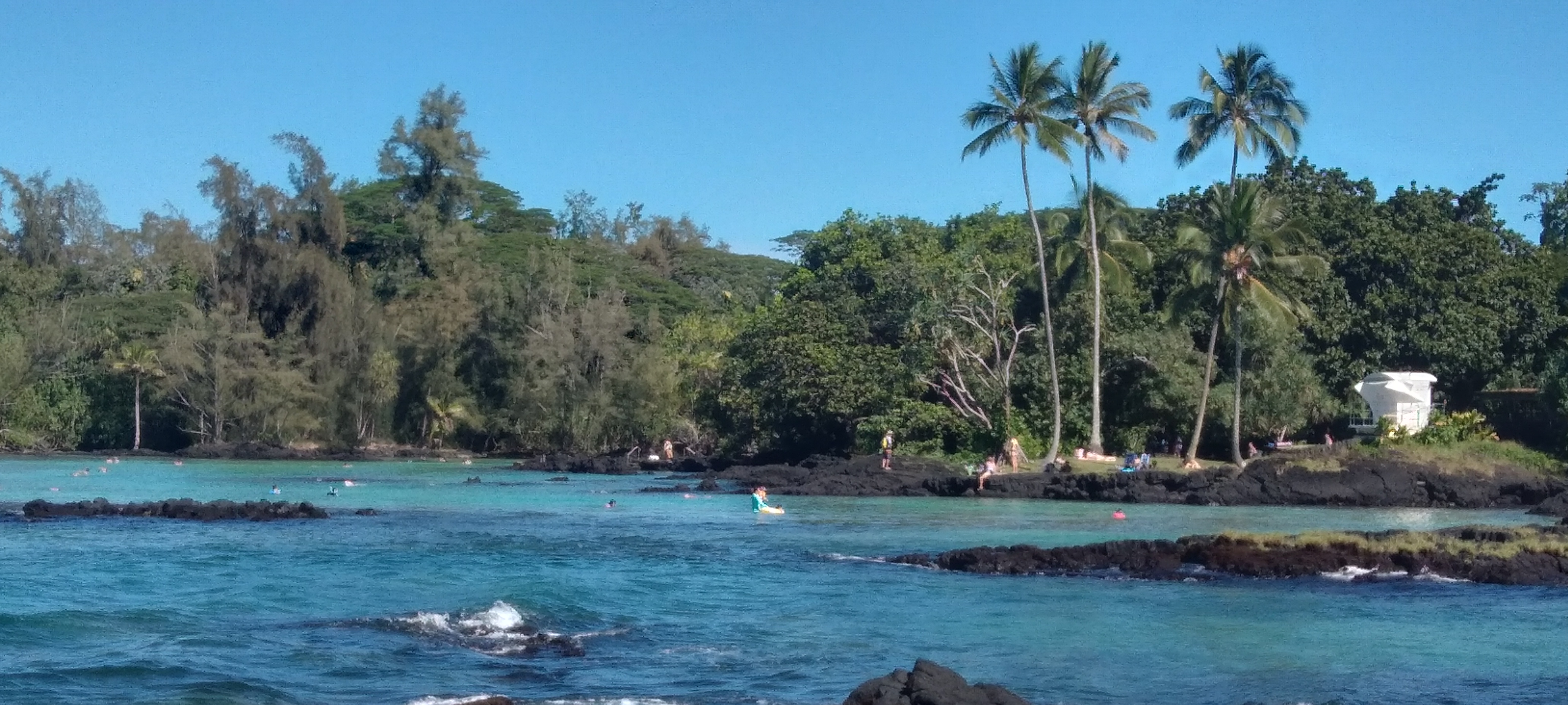
Keaukaha is the coast east of the Port of Hilo, along Kalanianaʻole Avenue. This is where Hilo’s swimming parks are: Carlsmith, Kealoha, Onekahakaha, Keaukaha Beach Park, and Richardson Ocean Park.
It’s a residential area, not a resort strip. Keaukaha is home to a Hawaiian Home Lands homestead community, set between Kalanianaʻole Avenue and the airport, which sits next to this coast.
Stay here if beach time near Hilo matters most. Check that any vacation rental is legal (see below).
Hilo outskirts and upcountry
Kaūmana is upslope from town on Kaūmana Drive, which becomes Saddle Road (Route 200). Kaumana Caves sit along this road. It’s a useful base if you plan to cross the island.
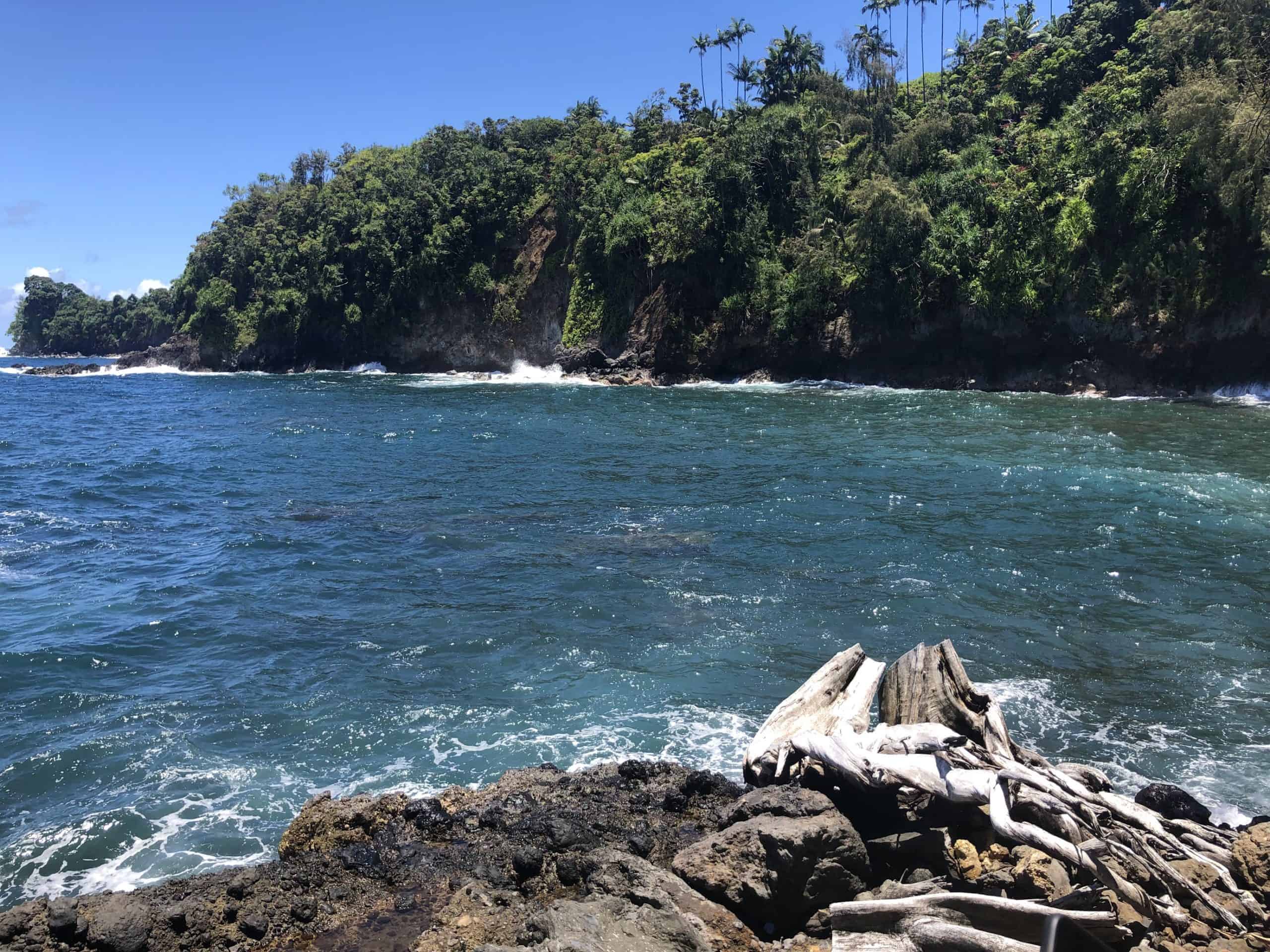
Wainaku and Pāpaʻikou are north of town. Honoliʻi Beach Park, Hilo’s surf spot, is about two miles north of downtown on Highway 19, below Wainaku. Pāpaʻikou is a few miles farther north. The tropical botanical garden in Onomea Valley is about five miles north of Hilo, off Highway 19.
Outskirts stays usually trade walkability for space. You will need a car.
Closest to Hawaiʻi Volcanoes National Park
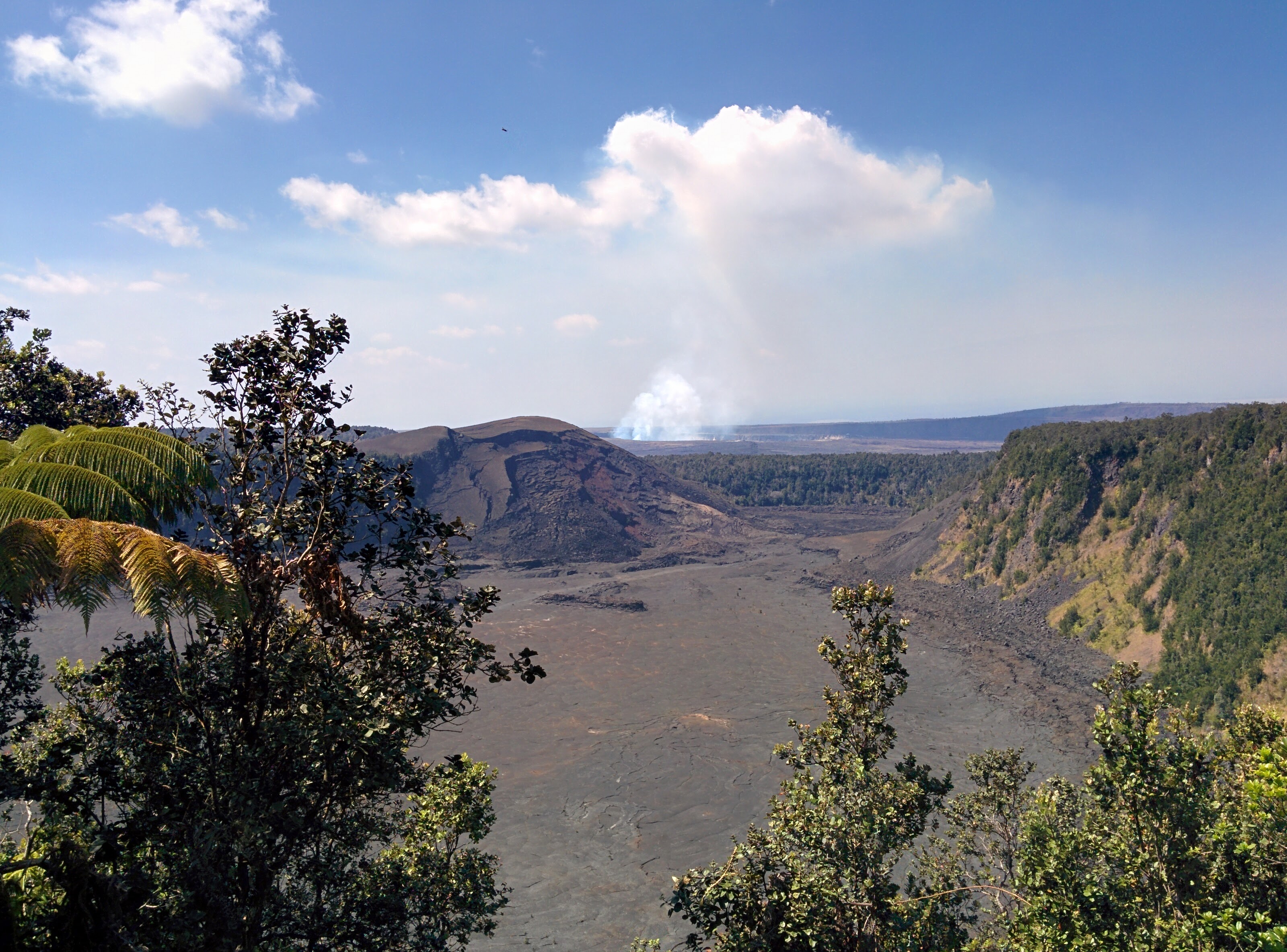
The closest community to Hawaiʻi Volcanoes National Park is Volcano Village, just outside the park boundary on the Highway 11 corridor. The Hawaiʻi Tourism Authority puts the village about five minutes from the park entrance, and about 45 minutes from Hilo (or two and a half hours from Kailua-Kona) on Highway 11.
The National Park Service measures the drive from Hilo to the park entrance at 30 miles southwest on Highway 11, about 45 minutes. From Kailua-Kona it is 95 miles southeast on Highway 11, or two to two and a half hours.
The Kīlauea summit sits at about 4,000 feet. The Park Service says it can be 12 to 15 degrees cooler than at sea level, and rainy and chilly any time of year. Bring layers. Stay in Volcano Village if the park is the main event, or if you want to be at the entrance early or late in the day.
Inside the park, rooms and campgrounds sit just beyond the entrance, along Crater Rim Drive and Highway 11. There is no public transit inside the park, and rideshare is hard to find, so plan on a car.
Vacation rentals
Hotels in Hilo are concentrated on Banyan Drive. Vacation rentals spread across town, Keaukaha, the outskirts, and Volcano Village. Rentals often mean a kitchen and a quieter street. They also mean checking that the listing is legal.
Hawaiʻi County regulates short-term vacation rentals (STVRs) under Ordinance 2018-114 (Bill 108). The law sets where they’re allowed. STVRs outside those zones can only operate with a Nonconforming Use Certificate, which covered rentals operating before April 1, 2019.
State law also requires every ad for a short-term rental to show the operator’s tax registration number (or a link to it). Before you book:
- Look for the Transient Accommodations Tax registration number in the listing.
- Ask the host whether the rental is registered with the County.
- If a host can’t answer, book somewhere else.
Hilo side or Kona side?
Stay on the Hilo side if your days are Volcanoes National Park, waterfalls, gardens, the farmers market, and a protected-cove swim. Hilo is 30 miles from the park entrance. Kailua-Kona is about 95 miles.
Stay on the Kona side if your days are white-sand beaches, snorkeling, and dry weather.
On a short trip, pick one. On a week or more, a split can work. The full comparison is in Kona vs Hilo. For trip length, see how many days you need.
What's nearby
- Hawaiʻi Volcanoes National Park: 30 miles southwest on Highway 11, about a 45-minute drive, per the National Park Service. There’s no public transit inside the park.
- Carlsmith Beach Park: County beach park on Kalanianaʻole Avenue in Keaukaha. Lifeguards daily, 9:30 a.m. to 4:45 p.m.
- Hilo Farmers Market: Open daily, 7 a.m. to 3 p.m. Wednesday and Saturday are the big market days.
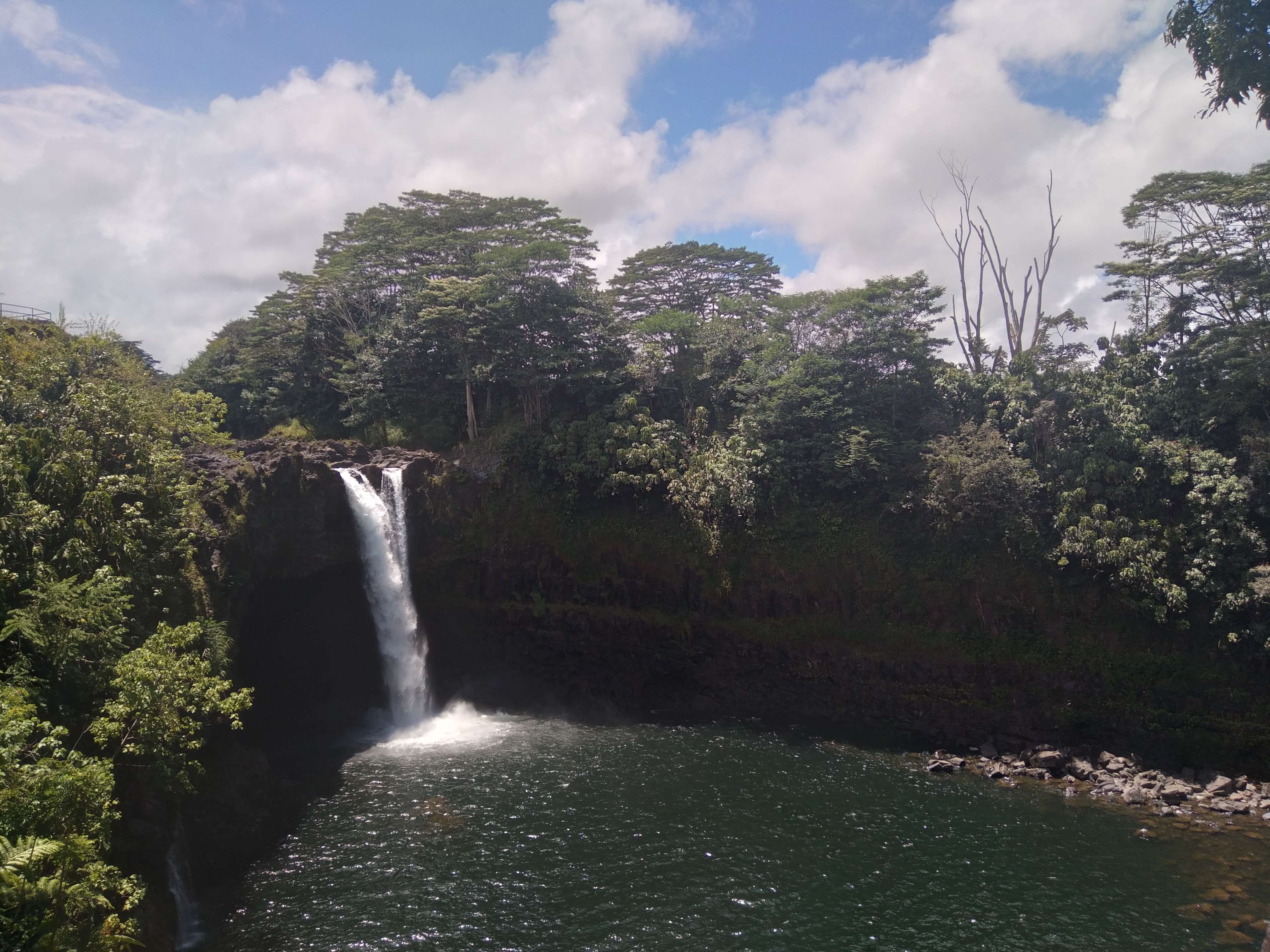
- Rainbow Falls and Boiling Pots: Wailuku River State Park, reached by Waiānuenue Avenue from downtown. Rainbow Falls is about 80 feet tall.
- ʻAkaka Falls State Park: At the end of ʻAkaka Falls Road (Highway 220), 3.6 miles from Honomū. A 0.4-mile paved loop with steps leads to the 442-foot falls. Nonresidents pay entry and parking fees. See the waterfalls guide.
- Liliʻuokalani Park and Gardens: 30 acres of Japanese-style gardens, fishponds, and pagodas on Waiākea Peninsula.
- ʻImiloa Astronomy Center: Planetarium and Maunakea exhibits above town.

Practical tips
Rain. Hilo is wet. NOAA’s 1991–2020 normals for Hilo International Airport show about 120 inches of rain a year, with measurable rain on about 186 days. November is the wettest month on average (about 14 inches). May is the driest (about 7). Pack a rain jacket. See Big Island weather and the packing list.
Temperature. The same normals put the average high near 81°F and the average low near 67°F. Volcano is cooler.
Getting there. Hilo International Airport (ITO) is in Hilo, next to Keaukaha. The National Park Service lists Hawaiian Airlines and Southwest Airlines as the inter-island carriers at Hilo. Kona’s airport (KOA) is the one served by many trans-Pacific airlines, per the NPS. Check current routes before you book. See the airports guide.
Car. Rent one. Rental cars are available at both airports. You’ll need a car for the park, the waterfalls, and anything outside downtown. Rideshare is very hard to find at the park, according to the NPS.
Crossing the island. From Kona, it’s Saddle Road or around the coast. Read the Saddle Road guide before you go. Fill up first.
FAQ
Is Hilo a good place to stay on the Big Island?
Yes, if your trip is the volcano, waterfalls, and gardens. Hilo is 30 miles from Hawaiʻi Volcanoes National Park, and Kona is about 95. If you want white-sand beaches and dry weather, stay in Kona.
Where do people stay in Hilo?
Downtown along the bayfront, on Banyan Drive on the Waiākea Peninsula — where most of Hilo’s hotels sit — out Kalanianaʻole Avenue in Keaukaha, and in the neighborhoods upslope and north of town. The closest stays to the national park are in Volcano Village, just outside the entrance on Highway 11.
Are vacation rentals legal in Hilo?
Some are. Hawaiʻi County limits where short-term vacation rentals can operate (Ordinance 2018-114). State law requires each rental ad to show the operator’s tax registration number. Check for it before you book.
How rainy is Hilo?
About 120 inches a year at the airport, with measurable rain on about 186 days, per NOAA’s 1991–2020 normals. Pack for rain in any month.
How far is Hilo from Volcanoes National Park?
30 miles southwest on Highway 11, about 45 minutes, per the National Park Service. Volcano Village is about five minutes from the park entrance.
Which airport should I fly into for Hilo?
Hilo International Airport (ITO) is closest. Many visitors land at Kona (KOA) instead and drive across. From Kona to the park alone is about 95 miles, so plan the crossing.
